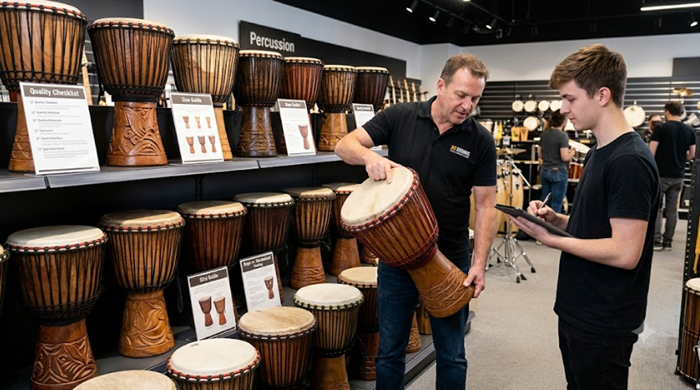
What Every Music Retailer Should Know Before Stocking Djembe Drums
Quick answer: Music retailers considering djembe drums should evaluate supplier consistency, price tiers across sizes, and shelf appeal, since djembe buyers range from beginners looking for an affordable entry-level drum to serious percussionists seeking a performance-grade instrument, and inventory needs to serve both.
Djembe drums have grown from a niche world-music item into a steady inventory category for many music retailers, driven by rising interest in hand percussion, drum circles, and world music education. For store owners deciding whether to add or expand a djembe section, understanding buyer behavior and supplier reliability matters as much as the product itself.
Why Djembe Drums Are a Strong Retail Category
- Broad customer base, spanning beginners, hobbyists, educators, and professional percussionists.
- Visual and cultural appeal, making djembes a strong in-store display and impulse-purchase item.
- Repeat accessory sales, including bags, straps, tuning rope, and replacement drumheads.
- Gift market potential, as djembes are frequently purchased as unique, meaningful gifts rather than purely functional instruments.
What to Evaluate Before Adding Djembe Drums to Inventory
- Supplier consistency. Retailers need confidence that a reordered batch will match the tone and build quality of the original sample.
- Size and price range coverage. Stocking a spread from smaller, budget-friendly djembes to larger performance models serves the widest customer base.
- Minimum order requirements. Understanding a supplier’s MOQ helps retailers manage cash flow and shelf space realistically.
- Return and defect policies. Hand-carved, natural-material instruments can vary; clear supplier policies reduce risk for retailers.
- Lead times for restocking. Reliable turnaround matters for a category prone to seasonal spikes, such as gift-giving periods.
Best-Selling Djembe Sizes for Retail
Retailers commonly see the strongest turnover in:
- Small to mid-size djembes, popular with beginners, students, and gift buyers.
- Standard performance-size djembes, favored by intermediate and experienced players.
- Mini decorative djembes, which sell well as souvenirs or accent pieces rather than playable instruments.
Carrying a spread across these categories, rather than concentrating on one size, tends to capture the widest range of walk-in and online buyers.
Building a Reliable Supplier Relationship
For retailers, a good djembe supplier relationship typically includes:
- Sample units available before committing to a full order
- Transparent material sourcing (wood type, drumhead material)
- Consistent packaging suited for retail display or online shipping
- Willingness to accommodate smaller trial orders before scaling up
Conclusion
Djembe drums can be a genuinely profitable, low-risk addition to a music retailer’s inventory when sourced carefully. Prioritizing supplier consistency, a well-rounded size range, and manageable order terms will help retailers serve everyone from first-time buyers to serious percussionists without overcommitting inventory risk.
