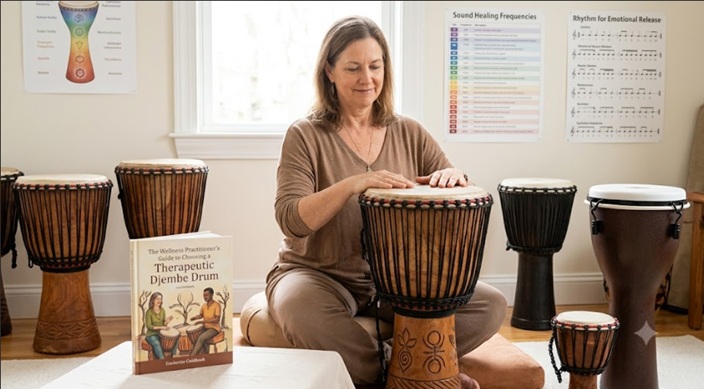
The Wellness Practitioner’s Guide to Choosing a Therapeutic Djembe Drum
Quick answer: A therapeutic djembe drum is chosen primarily for comfortable playability, a warm and forgiving tone, and durability under repeated group use, rather than performance-grade projection, since its main role is supporting rhythm-based stress relief and group healing sessions rather than concert performance.
Hand drumming has moved well beyond music classrooms and concert stages. Therapists, yoga studios, and retreat centers increasingly use group drumming for stress reduction, mindfulness, and community bonding, and the djembe has become one of the most common instruments in that space thanks to its intuitive playing technique and wide tonal range.
Why Djembe Drums Are Popular in Wellness Settings
- Low barrier to entry — participants with no musical background can join a session immediately.
- Physical and emotional release — the physicality of striking a drum is often used therapeutically to help participants process stress or emotion.
- Group cohesion — synchronized drumming is widely used in group therapy and community-building exercises to build a shared rhythm and sense of connection.
- Versatile settings — the same drum works for a private counseling session, a yoga studio class, or a large outdoor healing circle.
What Makes a Djembe “Therapeutic-Ready”
- Comfortable rim and shell shape. Sessions can run long, so a drum that’s comfortable to hold and play for extended periods matters more than in short performance settings.
- Forgiving tone. A drum with a warm, less sharp slap tone tends to suit meditative or reflective sessions better than a performance-tuned instrument built for cutting through a mix.
- Consistent quality across a set. Facilitators leading group sessions need multiple drums that sound cohesive together, not one standout instrument among mismatched others.
- Lightweight, portable construction. Many practitioners travel between studios, retreat locations, or client sites, so weight and case options matter.
- Reasonable price point for group ownership. Facilitators often need enough drums to outfit an entire circle, making mid-range, consistent-quality sets more practical than a single premium piece.
How Drum Circles and Wellness Centers Typically Use Djembe Drums
- Guided drum circles for stress relief, often run by certified facilitators in community or corporate wellness settings.
- Sound healing sessions, sometimes paired with other resonant instruments to create layered, meditative soundscapes.
- Group therapy exercises, where synchronized rhythm is used to support communication and emotional expression.
- Yoga studio add-on classes, blending movement, breathwork, and rhythm-based practice.
Sourcing Considerations for Practitioners and Studios
Because wellness programs often need multiple matching drums rather than a single instrument, facilitators and studio owners benefit from suppliers offering:
- Set pricing for multiple units at once
- Consistent tone and sizing across a batch
- Lightweight cases or bags suited for frequent transport
- Guidance on basic drum care for instruments used in high-frequency group settings
Conclusion
For wellness practitioners, the right djembe drum isn’t necessarily the most decorative or performance-tuned option; it’s the one that plays comfortably, sounds cohesive across a group set, and holds up to frequent, hands-on use in therapeutic and mindfulness settings. Prioritizing comfort, consistency, and durability will serve a growing drum circle or wellness practice far better than chasing a single showcase instrument.
